

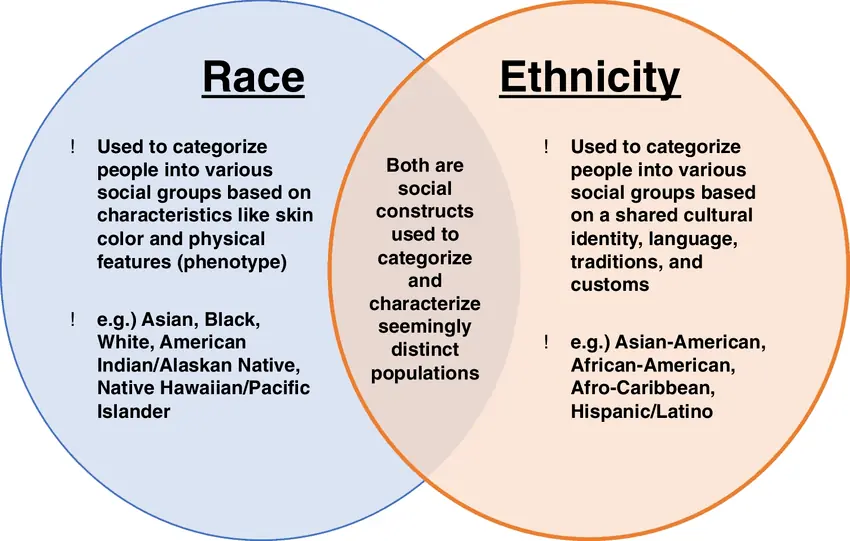
In today’s society, many people struggle to answer the question: What Is the Difference Between Race and Ethnicity? (Complete 2026 Guide). Confusion arises because these terms are often used interchangeably, yet they have distinct meanings in science, culture, and identity.
From clinical practice to public health research, understanding What Is the Difference Between Race and Ethnicity? (Complete 2026 Guide) is essential. Race usually refers to physical traits, while ethnicity involves shared culture, language, and ancestry. These differences affect everything from census data to healthcare outcomes.
This guide explains What Is the Difference Between Race and Ethnicity? (Complete 2026 Guide) in clear, evidence-based terms. You will learn how race and ethnicity intersect, why labels matter, and how to understand your own identity in a scientifically accurate and culturally sensitive way.
1. What Is Race?
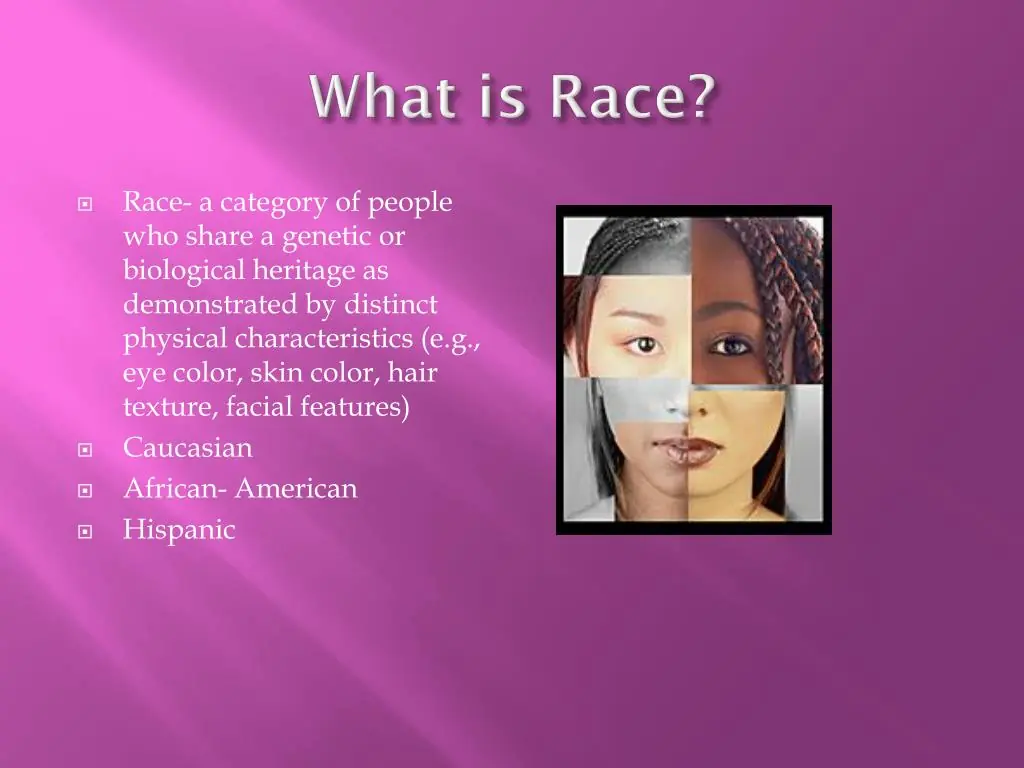
Race refers to the classification of people based on visible physical traits such as skin color, hair type, and facial features. It is largely a social construct rather than a strictly biological category. Race is often used in society, medicine, and policy but does not reliably predict individual genetics or identity.
Biological Perspective
Race is often linked to visible physical traits such as skin color, hair type, and facial features. However, research from Nature Genetics and other peer-reviewed studies shows that humans share over 99.9% of their DNA. Variations within so-called racial groups are often greater than variations between them.
Clinically, this means race examples alone cannot predict individual health risks. Two people labeled as the same race may have vastly different genetic profiles. This is why understanding what is race requires combining biological observation with social context rather than relying on genetics alone.
Also Read: What does it mean when you dream about someone?
Social Construction of Race
Historically, racial categories were created to justify social hierarchies, colonialism, and systemic inequality. Sociologists and public health experts now view race as a social construct with real-life consequences on access to resources, healthcare, and opportunities.
Studies on socioeconomic status and health disparities reveal that many outcomes attributed to race are actually driven by environmental and systemic factors. Recognizing the difference between race and ethnicity sociology helps clarify why racial labels exist but should not be treated as strictly biological categories.
2. Racial Categories and Classifications
Most countries use broad racial groupings, including White, Black, Asian, Indigenous, and Mixed. These categories differ across nations; for instance, race and ethnicity examples in the UK do not always match U.S. census classifications.
Rigid racial labels can oversimplify human diversity and reinforce stereotypes. In healthcare, race is still tracked for population trends, but clinicians are encouraged to interpret these data alongside cultural and environmental factors.
Scientific debates continue regarding the validity of racial classification. Understanding the difference between race and ethnicity on forms highlights the importance of combining biological, social, and cultural insights for accurate identification.
3. Limitations of Race as a Scientific Concept
Despite its widespread use, race has significant limitations as a scientific category. Genetic research shows no clear biological boundaries between racial groups, making race a poor predictor of individual traits or health outcomes.
Relying solely on race examples can lead to overgeneralization and stereotyping. For instance, assuming all individuals classified as Black share the same genetic risk factors ignores individual variation.
Race is still used in medicine, law, and policy for population-level analysis. However, ethical and academic criticism highlights that these categories can reinforce bias and fail to account for socioeconomic status, environment, and cultural context.
Key Points on Limitations of Race:
- No strict genetic boundaries between races
- Overgeneralization can lead to stereotyping
- Social and environmental factors often more predictive than race
- Ethical concerns in research and policy
Understanding these limitations clarifies the difference between race and ethnicity, emphasizing that race is as much a social construct as a physical descriptor.
4. What Is Ethnicity?
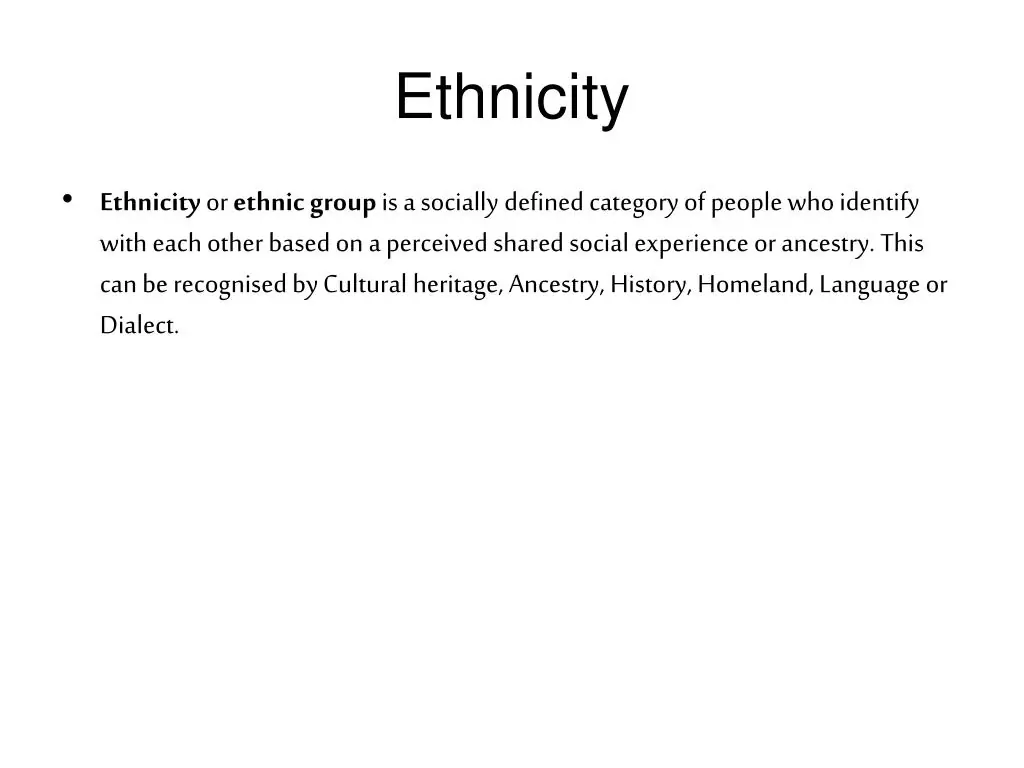
Ethnicity refers to shared cultural, linguistic, and ancestral traits that connect a group of people. It includes traditions, values, customs, and a sense of community or belonging. Unlike race, ethnicity is flexible, self-identified, and can evolve across generations.
Cultural Foundations
Ethnicity encompasses shared culture, language, traditions, and ancestry. It provides a sense of identity and belonging that often crosses geographic borders. Examples of ethnicity include Hispanic, Arab, Pashtun, Punjabi, Jewish, and Kurdish groups.
These groups share cultural practices such as food, clothing, language, and customs, which are central to community life. Unlike race, ethnicity is flexible and self-defined. People may identify with multiple ethnic groups, and ethnicity can evolve across generations or through migration.
Psychological & Social Identity
Ethnicity contributes to a sense of community and social cohesion. It influences values, beliefs, and intergenerational continuity.
From a public health perspective, understanding ethnicity is crucial for culturally sensitive care.Clinical studies show that health interventions are more effective when tailored to the cultural and social practices of ethnic communities.
5. Ethnic Groups and Identity Formation
Ethnic identity is complex and dynamic. It intersects with nationality, religion, and language, forming a multifaceted sense of self.
Global examples include Arabs in the Middle East, Jewish populations worldwide, Hispanic communities across the Americas, and South Asian groups such as Punjabi and Pashtun. People often navigate multiple identities, reflecting mixed heritage or migration experiences.
Ethnicity differs from nationality, which is legal citizenship, and from race, which is socially assigned physical categorization. Recognizing these distinctions is essential when addressing questions like is Asian a race or ethnicity or what is my race and ethnicity.
In practical terms, acknowledging ethnic diversity improves social inclusion, reduces cultural misunderstanding, and enhances equity in healthcare, education, and policymaking.
6. Key Difference Between Race and Ethnicity
Understanding the difference between race and ethnicity is easier when comparing them side by side. Below is a clear comparison:
| Feature | Race | Ethnicity |
| Basis | Physical traits (skin color, hair type) | Cultural factors (language, traditions, ancestry) |
| Flexibility | Mostly fixed by society | Can change or be multiple |
| Inheritance | Assigned socially, loosely linked to genetics | Passed through family, culture, and heritage |
| Self-Identification | Often limited by societal categories | Personal and community choice |
| Social Perception | How others categorize you | How community and society perceive cultural identity |
| Legal Classification | Often used in census, healthcare, and policy | Rarely used legally, more cultural |
Key insights:
- People often mix ethnic identities within one race, which explains questions like what is my race and ethnicity.
- Recognizing the distinction helps in healthcare, education, and research, especially when considering socioeconomic status and health disparities.
7. How Race and Ethnicity Overlap in Real Life
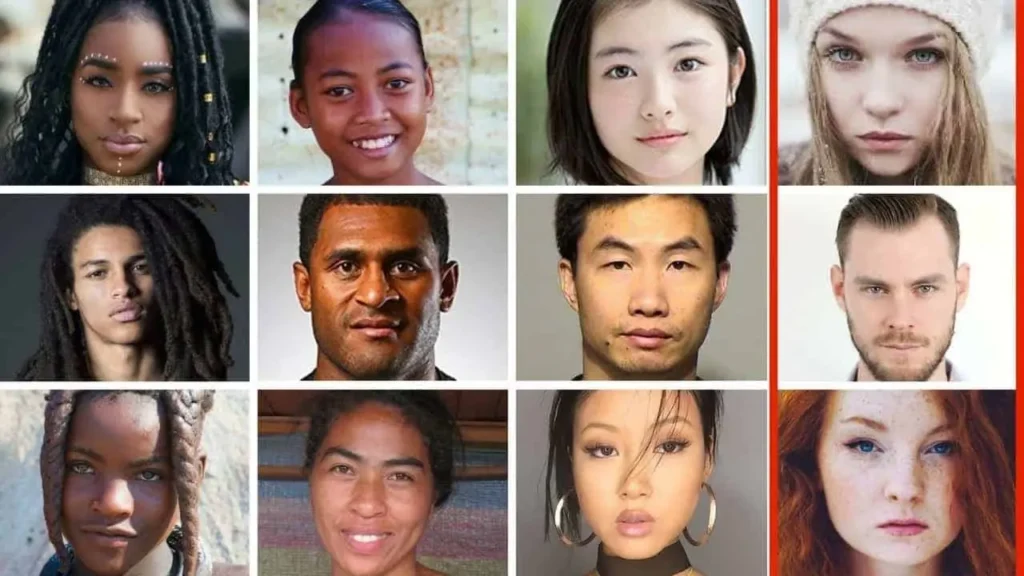
In practice, race and ethnicity frequently intersect. For example, someone may be racially classified as Asian but identify ethnically as Punjabi, highlighting both physical traits and cultural heritage.
Healthcare, public policy, and sociology studies show that understanding this intersection improves equity. Environmental factors, socioeconomic status, and cultural practices often impact outcomes more than race alone.
Case examples:
- Hispanic populations in the U.S. include individuals of multiple racial backgrounds.
- African diasporas globally exhibit diverse ethnic identities despite shared racial labels.
Recognizing these overlaps clarifies questions such as is Black a race or ethnicity and is Asian a race or ethnicity. It also reinforces why proper data collection should account for both race and ethnicity to avoid misrepresentation.
8. Racism, Ethnic Discrimination, and Social Inequality
Racial and ethnic distinctions are often tied to systemic inequities. Racial prejudice focuses on perceived physical traits, while ethnic discrimination targets cultural practices, language, or religion.
Structural racism and cultural marginalization affect healthcare, education, and socioeconomic status. For instance, studies on healthcare disparities indicate minority ethnic groups may receive delayed treatment or biased care.
Understanding the difference between race and ethnicity examples in society helps combat stereotyping and promotes inclusion. Evidence-based interventions include culturally sensitive healthcare, inclusive education, and policy reforms addressing systemic bias.
Key considerations:
- Misunderstanding race and ethnicity can exacerbate conflict.
- Inclusive strategies must consider race, ethnicity, and socioeconomic status together.
- Awareness of ethnic diversity improves social cohesion and health outcomes.
9. Why Understanding the Difference Matters Today
Understanding the difference between race and ethnicity is crucial across multiple areas of modern life. In education, accurate knowledge helps teachers address diverse classroom needs and reduces cultural misunderstandings.
In healthcare, recognizing race and ethnicity influences treatment planning, preventive care, and public health strategies. Research shows that considering ethnicity alongside race can improve patient outcomes and reduce disparities linked to socioeconomic status.
Policy-making and census data also rely on precise distinctions. Questions like difference between ethnicity and nationality or difference between race and ethnicity and nationality affect representation, funding, and social services.
Media and communication benefit as well.
Culturally sensitive reporting reduces stereotyping and ensures fair portrayal of diverse communities. Overall, distinguishing race from ethnicity enables equitable decision-making, inclusive programs, and culturally competent practices.
Frequently Asked Questions (FAQ’s)
1. Is race genetic or social?
Race is primarily a social construct. Genetic variation within races is often greater than between them, so biological definitions are limited.
2. Can ethnicity change over time?
Yes. People may adopt new cultural practices, learn new languages, or identify with multiple ethnic groups, reflecting evolving ethnic identity.
3. Are Arabs a race or ethnicity?
Arabs are considered an ethnic group, not a race. They share language, culture, and ancestry but may belong to multiple racial categories.
4. Is being Pakistani a race or nationality?
Being Pakistani is a nationality. Ethnically, Pakistan has Punjabi, Pashtun, Sindhi, Baloch, and other groups.
5. What is my race and ethnicity?
This depends on physical traits (race) and cultural background, traditions, and ancestry (ethnicity). Both may be self-identified.
6. Is Asian a race or ethnicity?
Asian is generally a racial classification, but it includes many ethnicities like Chinese, Indian, Japanese, and Punjabi.
7. Is Black a race or ethnicity?
Black is a racial category, encompassing diverse ethnic groups with distinct cultural identities.
8. Difference between race and ethnicity and nationality?
Race is physical traits, ethnicity is culture, and nationality is legal citizenship. Each category serves different social and legal purposes.
9. Difference between race and ethnicity on forms?
Forms often require selecting race and ethnicity separately to capture both physical and cultural identity for research, census, and healthcare data.
10. Why does understanding these differences matter?
rity helps reduce bias, improve healthcare, enhance education, and ensure equitable policy decisions that respect diversity.